Introduction to Operating Systems and UNIX History
Discover the fascinating origins of UNIX and Linux, from Bell Labs to the modern computing world
20 Concepts
~25 min read
Beginner
$|
Summary
This chapter explores the fascinating origins of UNIX and Linux, tracing the journey from Bell Labs in the 1970s to the modern Linux ecosystem. You'll learn about the key figures who shaped computing history—Ken Thompson, Dennis Ritchie, Richard Stallman, and Linus Torvalds—and understand the UNIX philosophy that continues to influence software design today.
Concepts You'll Learn
What Even IS an Operating System?
Before we dive into the wild story of UNIX and Linux (spoiler alert: it involves a video game, a Finnish college student, and a lot of very angry corporate lawyers), let's talk about what an operating system actually is.
The Restaurant Analogy
Imagine your computer is a restaurant. You've got the kitchen (the hardware—CPU, memory, hard drive), the customers (your apps and programs), and complete chaos trying to happen simultaneously. The operating system is basically the restaurant manager who keeps everything from catching fire.
OS Simulator
0s0
OS Simulator
You're the Operating System! Manage resources like a pro:
App Queue = Programs waiting to run
RAM Slots = Memory where apps load
CPU = Processes one app at a time
Drag apps from the queue to RAM slots!
Serve apps quickly before they crash (turn red)!
CPU (The Chef)
Memory Tables (RAM)
Waiting Line
Speed:1x
What the OS Does
Manages Memory
Makes sure Chrome doesn't hog ALL your RAM (okay, it still does, but at least the OS tries)
Handles Files
Keeps track of where everything is stored so you don't lose your homework
Runs Programs
Coordinates who gets to use the CPU and when
Talks to Hardware
Translates between your apps and devices like printers and USB drives
What You Want to Do
What the OS Does Behind the Scenes
Open a game
Loads game files from storage into memory, allocates CPU time
Save a document
Finds free space on disk, writes data, updates file system
Communicates with printer drivers, manages print queue
No OS = Expensive Paperweight
Without an operating system, your computer would just be an expensive paperweight with blinking lights. And that would be sad.
The Birth of UNIX: A Love Story (With Computers)
Our story begins in the late 1960s at a magical place called Bell Labs in Murray Hill, New Jersey. Bell Labs was basically the Hogwarts of technology—researchers there invented transistors, lasers, information theory, and yes, UNIX.
Fun Fact
Bell Labs scientists have won 9 Nobel Prizes! That's more than most entire countries.
1969
The Video Game Motivation
Ken Thompson and Dennis Ritchie were working on Multics, a complicated OS project that got cancelled. Ken was especially bummed because he'd been playing a video game called "Space Travel" and now had nowhere to play it!
1969
UNIX is Born
Ken found an old PDP-7 computer nobody was using and, over about a month, wrote an entirely new operating system so he could play his video game. That operating system became UNIX.
Gaming IS Productive!
Yes, you read that right. One of the most important pieces of software in human history was created partly because a guy wanted to play a video game. Never let anyone tell you that gaming isn't productive! Try it yourself:
PDP-7 — SPACE TRAVEL — 1969
SPACE TRAVEL
BELL LABS — PDP-7
MISSION: Visit all planets in the solar system!
Land on each planet to refuel and score points.
[ W / ↑ ] THRUST FORWARD [ S / ↓ ] REVERSE (slow down!)
[ A/D / ←/→ ] ROTATE [ SPACE ] LAND
FUEL
SCORE0000
TARGETEARTH
DIGITAL EQUIPMENT CORPORATION
UNIX Family Tree
Click on any node to learn more about that system. The connecting lines show how each operating system evolved from its predecessors.
Original UNIX BSD Family System V GNU Project Linux
UNIX (1969)
Click on a node in the tree to learn more about that operating system.
The Dynamic Duo: Ken and Dennis
Ken Thompson
Coding Wizard
Created UNIX
Co-invented Go programming language
Created UTF-8 encoding (that's why you can use emoji! 🎉)
Made complicated things simple
Dennis Ritchie
The Quiet Giant
Created the C programming language
Co-authored "The C Programming Language" (K&R)
Made software portable
Enabled modern computing
C: The Programming Language That Changed Everything
The C programming language (created by Dennis Ritchie around 1972) was a game-changer because it was:
1
High-level enough to be readable by humans (unlike assembly)
2
Low-level enough to do powerful system stuff (unlike most languages)
3
Portable – code could be moved between different computers!
hello.cThe Most Famous C Program
// The most famous C program ever - "Hello, World!"#include<stdio.h>intmain() {
printf("Hello, World!\n");
return0;
}
Why Does This Matter Today?
The C language is STILL used everywhere. The Linux kernel? Written in C. Windows? Mostly C. Your phone's operating system? C and its descendants. Even Python is written in C!
Try It Yourself!
Here's a simulated Linux terminal. Try running some commands like ls, cat hello.c, or help:
vt100 — student@pdp11
The UNIX Philosophy: Do One Thing Well
As Thompson, Ritchie, and their colleagues developed UNIX, they established a way of thinking about software that still influences how we write programs today.
Do One Thing Well
Each program should focus on a single task and do it excellently
Work Together
Programs should be designed to work with other programs
Text is Universal
Use text as the common format for data (not proprietary formats)
Small Modular Tools
Build small, sharp tools rather than giant Swiss Army knife programs
LEGO vs Pre-built Toys
Think about it like LEGO bricks versus a pre-built toy. With LEGO, you can combine simple pieces to build anything. With a pre-built toy, you're stuck with whatever the manufacturer decided. UNIX tools are like LEGO bricks—you can combine them in creative ways!
Piping Commands TogetherUNIX Philosophy in Action
# Find all large files, list them, and sort by size
find /home -type f -size +100M | xargs ls -lh | sort -k5 -h
# This chains together:# find - locates files bigger than 100MB# xargs ls -lh - lists them with human-readable sizes# sort -k5 -h - sorts by the size column
UNIX Spreads: System V and BSD
Throughout the 1970s, UNIX spread like wildfire through universities and research labs. This led to two major branches:
UNIX System V
Commercial
The "official" commercial version released by AT&T in 1983. The corporate, buttoned-up version—stable, supported, and expensive.
Solaris (Sun Microsystems)
AIX (IBM)
HP-UX (Hewlett-Packard)
BSD Unix
Academic
The Berkeley Software Distribution. The rebellious, innovative, academic side of the UNIX family.
FreeBSD - powers Netflix!
OpenBSD - famous for security
macOS - Yes, it's BSD-based!
Wait, macOS is UNIX?
Yep! Next time you open Terminal on a Mac, you're using a UNIX system. Apple built macOS on top of BSD UNIX. So if you've ever used a Mac, congratulations—you've already used UNIX!
The Free Software Revolution
By the early 1980s, UNIX was everywhere—but there was a problem: it wasn't free. You couldn't share it, modify it, or see how it worked without paying AT&T a lot of money.
Richard Stallman (RMS)
A brilliant MIT programmer who believed software should be free—not just free like "free pizza," but free like "freedom."
Run the program however you want
Study how the program works
Share copies with friends
Modify and share improvements
1983
GNU Project Announced
Stallman announced the GNU Project (GNU's Not Unix—programmers love recursive jokes). His goal: create a complete, free operating system.
1984-1990
GNU Tools Created
The GNU Project created GCC (compiler), GNU Emacs (editor), Bash (the shell you'll use!), and core utilities like ls, cp, mv.
1990
Almost Complete
GNU had almost everything needed for a complete operating system. Almost. They were missing one crucial piece: the kernel.
Linux Is Born: A Student Changes the World
And now we arrive at the star of our show: Linux.
1991 Helsinki, Finland
Linus Torvalds
A 21-year-old computer science student named Linus Torvalds was bored. He had a new computer with an Intel 386 processor, and he wanted to learn how it worked. He started playing with MINIX (a teaching version of UNIX) but found it too limited.
So, like any reasonable person, he decided to write his own operating system kernel. You know, as a hobby.
"
I'm doing a (free) operating system (just a hobby, won't be big and professional like gnu) for 386(486) AT clones.
— Linus Torvalds, August 25, 1991
Spoiler alert: It got big. REALLY big.
What's a Kernel?
The kernel is the core of an operating system—the part that talks directly to the hardware. If the OS is a restaurant manager, the kernel is the manager's brain.
Why Did Linux Take Off?
Perfect Timing
Released just when the internet was starting to grow
When you use Google, Facebook, Amazon, or basically any website, you're probably talking to a Linux server!
Linux Distributions: Pick Your Flavor!
Here's something that confuses newcomers: There's no single "Linux." Instead, there are hundreds of Linux distributions (or "distros")—different organizations packaging the Linux kernel with various software, configurations, and design choices.
It's Like Ice Cream!
The base is the same (milk, sugar, cream), but you can have chocolate, vanilla, strawberry, or that weird lavender flavor the fancy shop sells. Linux distributions are similar—same kernel, different everything else.
Debian
The Grandparent of Many
Founded in 1993 by Ian Murdock (Debra + Ian = Debian ❤️). Known for rock-solid stability and huge software repository.
Over 59,000 packages
Community governance
apt package manager
Ubuntu
Linux for Human Beings
Released in 2004 by Canonical. "Ubuntu" means "humanity towards others" in South African philosophy.
User-friendly installation
Regular releases
Great hardware support
Massive community
The Distro Family Tree
Debian→Ubuntu → Linux Mint, Pop!_OS, Elementary OS
Debian→Raspberry Pi OS
Red Hat→Fedora → CentOS, Rocky Linux
Arch→Manjaro, EndeavourOS
POSIX: Making Everyone Play Nice
With all these different UNIX versions and Linux distributions, how does software know how to work on all of them? Enter POSIX (Portable Operating System Interface).
POSIX Standards
A set of standards created by the IEEE that defines how a UNIX-like operating system should behave. It's like a rulebook that ensures compatibility.
Driving Rules Analogy
POSIX compliance is like everyone agreeing to drive on the same side of the road. Without it, crossing borders (or moving your code between systems) would be chaos!
Why Does All This History Matter to YOU?
1
Linux Powers the Modern World
Web development? Linux servers. Data science? Linux. Cybersecurity? Linux. Cloud computing? Definitely Linux.
2
UNIX Philosophy Guides Software Design
The idea of small, modular tools that work together is everywhere—microservices, APIs, the command line.
3
Understanding History = Understanding the Present
Why does macOS have a command line? (BSD!) Why do things work the same on Mac and Linux? (POSIX!)
4
Open Source is the Future
The collaborative model that Linux pioneered is now how much of the tech world works.
5
It's Actually a Cool Story!
A video game, a student's hobby project, a bearded guy who really cares about freedom... tech history is wild!
Key Takeaways
An operating system manages your computer's resources
UNIX was created at Bell Labs in 1969
Dennis Ritchie created C, making software portable
The UNIX Philosophy emphasizes small, modular tools
BSD came from UC Berkeley (powers macOS!)
Richard Stallman started GNU for free software
Linus Torvalds created Linux in 1991
Distributions package Linux for different uses
POSIX ensures compatibility
Linux is the most widely-deployed OS in history
Test Your Knowledge!
See how much you've learned about UNIX and Linux history.
Question 1 of 10
0/ 10
Great job!
You've learned a lot about UNIX and Linux history.

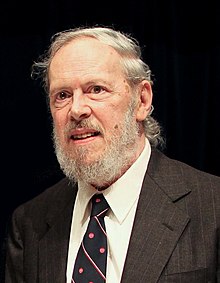

 Linus Torvalds